A Landscape that is a true masterpiece
Arlberg farmers ensure well-maintained alpine pastures and meadows
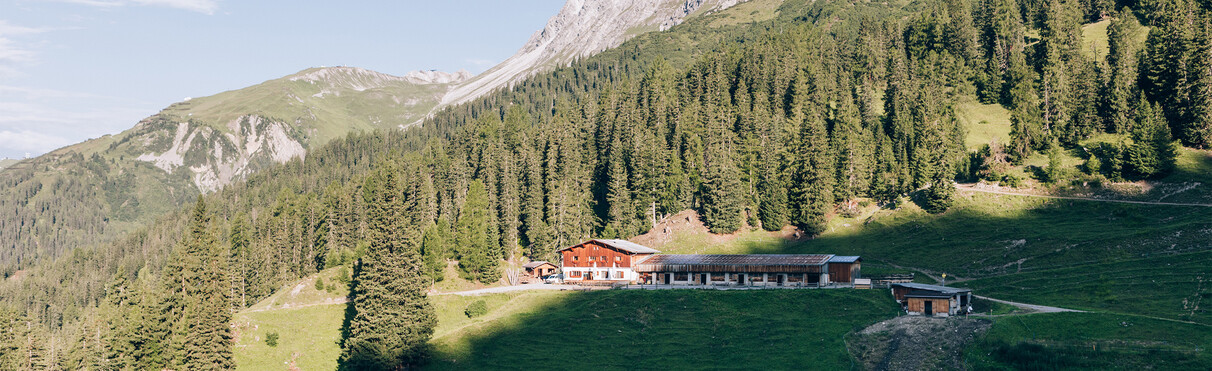
This idyllic scene is the result of hard work: keeping the traditional cultural landscape of the Arlberg intact – as a habitat, place of recreation and protection against natural hazards – requires farmers to put their heart and soul into cultivating the meadows on the mountains and in the valleys. Be it harvesting hay or running an alpine farm: this is how the beauty of the Arlberg really comes into its own!
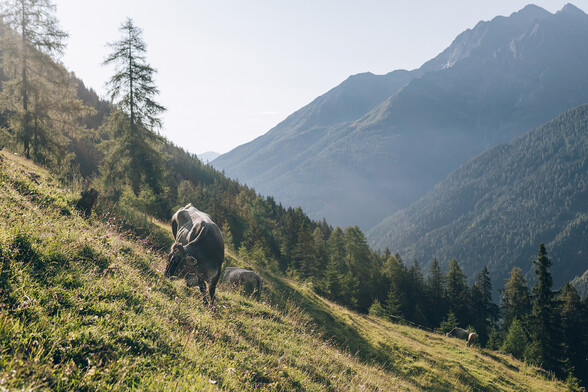
Small family businesses like that of Daniel Juen, a third-generation farmer from Flirsch, which is located 1,200 metres above sea level, contribute to the Arlberg’s picture-postcard panorama. The farm comprises around 4.5 hectares of grassland. Juen mows the meadows near the valley twice a year and those at an altitude of 1,600 metres once a year. “This is how we get fodder for the winter,” he explains. “Well-maintained meadows also look nicer and create popular recreational areas in the region.” This is why even farmers who no longer have their own livestock are turning to mowers and tractors. The many brightly coloured meadows in the Stanzertal valley demonstrate the benefits this gentle cultivation has on biodiversity – such as not mowing too often or over-fertilising. As well as harvesting hay, grazing is also a part of landscape conservation. For centuries, cows, sheep, horses and goats have grazed on the Arlberg alpine pastures, providing benefits that go far beyond what meets the eye, both ecologically and economically, as well as in terms of protection against natural hazards.
Alpine summer with an Impact
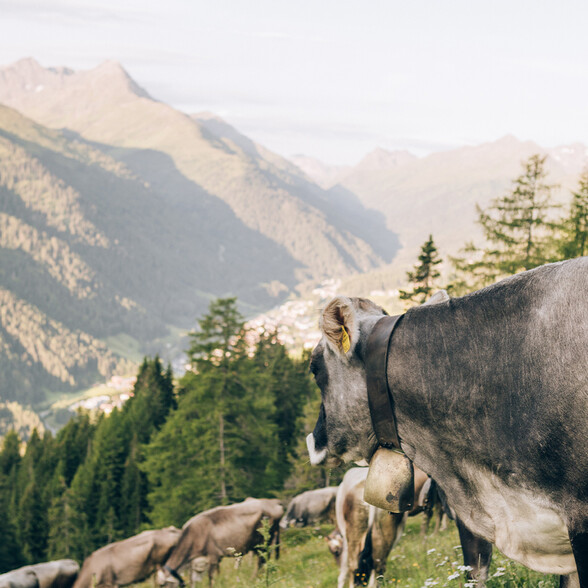
While Juen’s cattle spend the summer in Verwall and Maroi, Anton Probst from St Jakob herds his Five dairy cows up to the Putzen Alpe. As the alpine pasture manager, he organises the entire alpine summer there with Bernhard Sailer. Their work starts early: they roll up their sleeves as soon in May as the last remnants of snow melt around the popular mountain pasture at 1,726 metres below the Hirschpleiskopf. This is when they have to clear away any Damage caused by avalanches, cut back shrubs, and remove stones and branches so that new grass can come up. The cattle will be driven up to the mountain pastures at the beginning of June at the latest. “It’s completely unremarkable compared to the festive cattle drive in autumn,” says Probst. The farmers from the St. Jakob districts of Gand, Gsör and Bach divide into two groups and lead their animals along the hiking Trail to the alpine pasture.
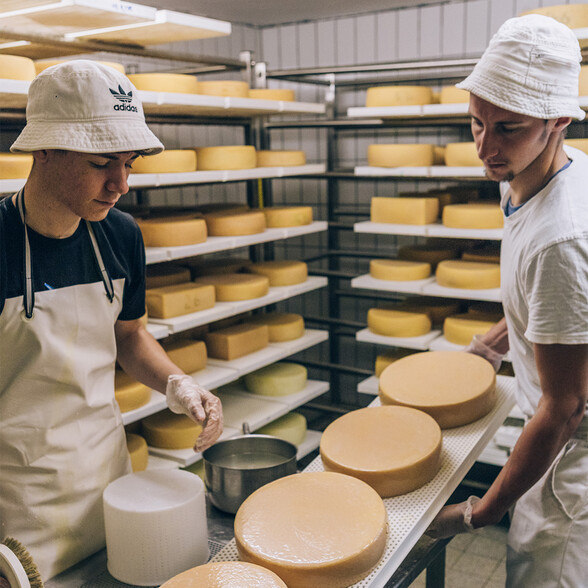
An average of 55 dairy cows spend the summer here, most of which are local to the region. They are tended by a herdsman who accompanies them to the pastures every day – sometimes as high as the Leutkircher Hütte at 2,251 metres. Their fresh milk is used to make delicious alpine butter, cheese, buttermilk and whey in the alpine dairy. It’s a good place to stop while hiking or biking, and you can support the region’s sustainably managed alpine pastures at the same time!
The Putzen Alpe in figures
152 hectares
Cultivated area
1,700 m – 2,200 m
Altitude of grazing areas
7
People make up the team: two alpine pasture managers, a herdsman, a shepherd with an assistant shepherd, and a farm manager with an assistant
55
Dairy cows, 13 pigs and 8 goats spend the summer here on average
3 + months
The length of the alpine summer (early June to mid-September)
26
Total number of alpine pastures in the district of Landeck
“Managed mountain pastures preserve the cultural landscape – but it is essentially a cycle:wwboth locals and holidaymakers can support the alpine pastures by visiting them.”
Anton Probst
Putzen Alpe pasture Manager
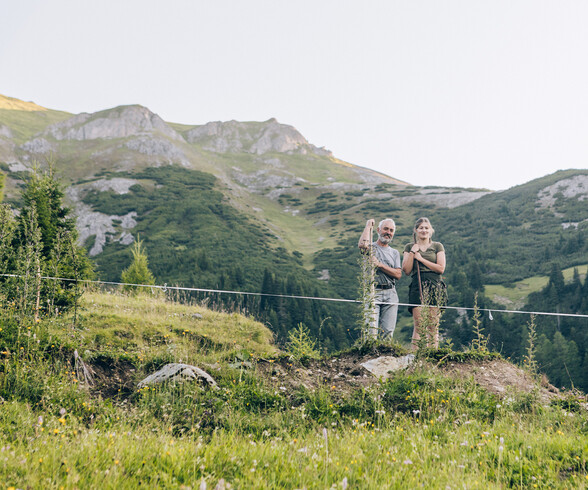
As with so many other idyllic places, alpine farming is not a sure-fire success – especially in times of advancing climate change. This traditional system is becoming increasingly vulnerable due to an earlier start to the growing season, changing precipitation patterns and declining cattle figures. Although livestock numbers are currently stable in St. Anton am Arlberg, specific measures are also being taken here to tackle the challenges posed by climate change. “The key is to adapt pasture management to Climate “Managed mountain pastures preserve the cultural landscape – but it is essentially a cycle: both locals and holidaymakers can support the alpine pastures by visiting them.” Anton Probst Putzen Alpe pasture Manager change,” says Michaela Gasser-Mark, coordinator of the KLAR! Arlberg Stanzertal model region for adapting to climate change. Together with the tourism association and the municipalities of Strengen, Flirsch, Pettneu and St. Anton am Arlberg, the “Climate-friendly alpine pasture and grazing management” initiative was launched with the aim of raising awareness among local farmers, alpine pasture managers and the general Population of climate-friendly land management practices.
Velcro fasteners instead of Erosion
Dazu gehört zum Beispiel, den Almauftrieb je nach Vegetationslage früher anzusetzen. Auch eine gelenkte Weideführung – also die gezielte Steuerung, wo und wann die Tiere grasen – hilft dabei, eine gleichmäßige Abweidung zu erreichen. Ebenso wichtig: die Anpassung der Tierzahlen an das verfügbare Futterangebot. „Nur so bleiben unsere wertvollen Hochweiden erhalten und dienen weiterhin als natürlicher Schutz vor Muren oder Gleitschneelawinen“, erklärt Gasser-Mark. Bildlich gesprochen wirken kurzgefressene Weiden nämlich wie ein riesiger Klettverschluss: Sie halten den Schnee besser fest und sind auch widerstandsfähiger gegen Erosion bei Starkregen. Wer mehr darüber erfahren möchte, findet auf den Almen Tritsch, Rendl, Putzen und Nessler neuerdings Infotafeln zur klimafitten Almwirtschaft. Denn genau dort, wo die Landschaft zur gelebten Verantwortung wird, zeigt sich: Damit das Meisterwerk Arlberg bleibt, wie wir es lieben, braucht es altes Wissen – und neue Wege.