A buzzing diversity project for the Arlberg region
Small insects, big impact
The Tyrol region is home to 370 wild bee species, vital pollinators that are under threat from shrinking habitats and the use of pesticides. Together with honey bees, they play a crucial role in biodiversity. A strong signal in favour of helpful insects is now being sent in St. Anton am Arlberg. A new apiary has been installed in Verwall. An adjoining wild bee nature Trail invites hikers to explore their fascinating world.
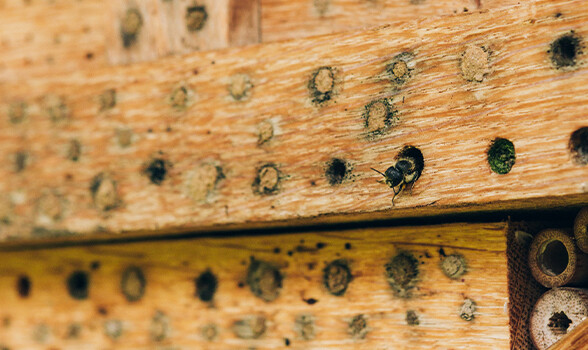
When it comes to bees, all the attention tends to go to the honeybee. But it has an equally fascinating relative: the wild bee. From black to iridescent green, with yellow or red stripes, and featuring a wide Variety of colours on their heads – these helpful insects are impressive simply because of their diversity. There are around 370 species in Tyrol, approximately 700 across Austria as a whole, and over 20,000 worldwide. The smallest wild bees found in Tyrol measure just five millimetres, while some of the bumblebees buzzing around can grow to a whopping three centimetres. In addition to their size and appearance, wild bees also differ in their diverse nesting habits: some prefer crevices in the ground, while others favour sandy soil, old wood or dead, hollow plant stems.
Protection for endangered pollinators
They are responsible for pollinating around 80 percent of grassland and agricultural plants. However, increasing use of pesticides, loss of habitats and nesting sites, and disappearance of flower- and nectar-rich pastures pose an increasing threat. As Johanna Bano from the Arlberg Beekeepers’ Association explains: “although beekeeping as a hobby has taken off in
recent years, we mustn’t forget about wild bees.” As part of the KLAR! Arlberg Stanzertal region, the municipality of St. Anton am Arlberg has launched a special project to support honey bees and wild bees.The aim is to provide endangered pollinators with a greater number of habitats, thereby actively contributing to the preservation of biodiversity. “Both our environment and our food supply are dependent on bees. Protecting them means preserving the diversity of nature and ensuring that it is safeguarded for future generations,” says Mayor Helmut Mall, who is closely involved with the project. Measures such as planting wildflower beds, installing bee hotels and raising public awareness are helping to secure the region’s long-term ecological future.

“Although beekeeping as a hobby has taken off in recent years, we mustn’t forget about
wild bees.” Johanna Bano, Arlberg Beekeepers’ Association
On the trail of wild bees
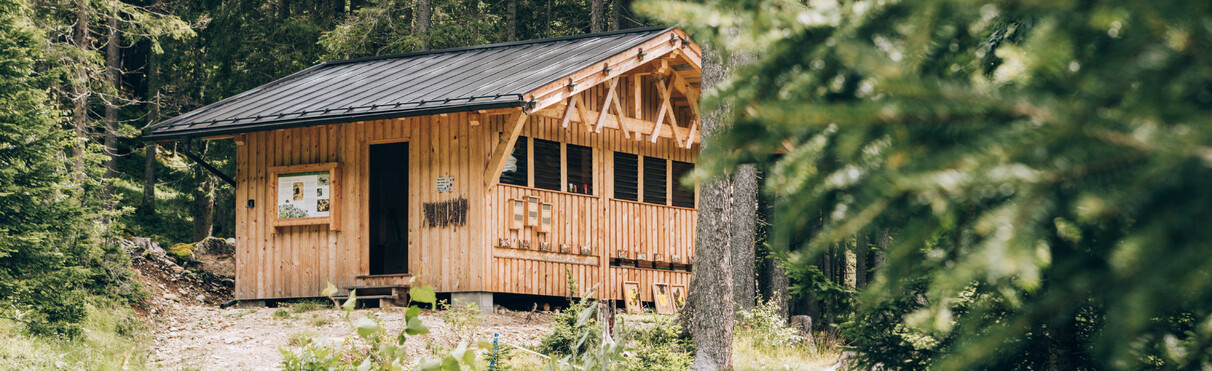
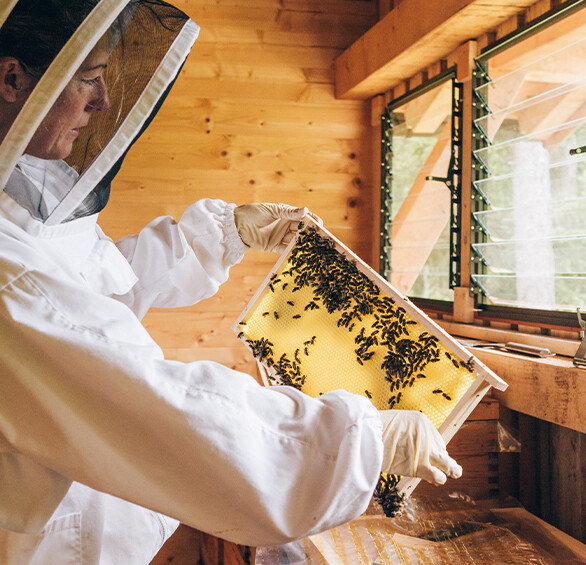
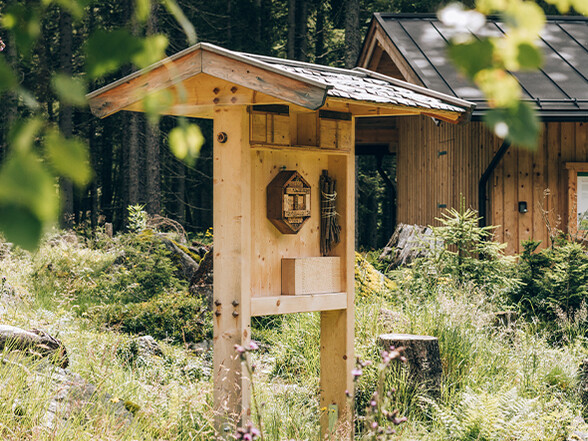
In collaboration with the Arlberg Beekeepers’ Association, a new apiary has been installed in Verwall, which now provides a home for several bee colonies. A diverse habitat has also been created for wild bees around the lodge with its own sandarium, a natural slope and wild roses planted especially for them. The traditional, colourfully painted entrance boards are particularly attractive. The apiary can be accessed via the new KLAR! wild bee trail. The nature trail was developed in cooperation with the University of Innsbruck’s Department of Botany and with the professional advice of wild bee expert Timo Kopf. Nine explanatory panels provide information on the diversity, lifestyle, foraging plants, conservation measures and threats to wild bees. Expressing her delight at the project’s success, Michaela Gasser Mark, coordinator of the Arlberg Stanzertal KLAR! Region said: “this project shows how the St. Anton am Arlberg KLAR! community can combine adaptation to Climate change in the region with nature conservation, species protection and cultural heritage in a highly effective way.”
Difference between Honeybees and Wild bees
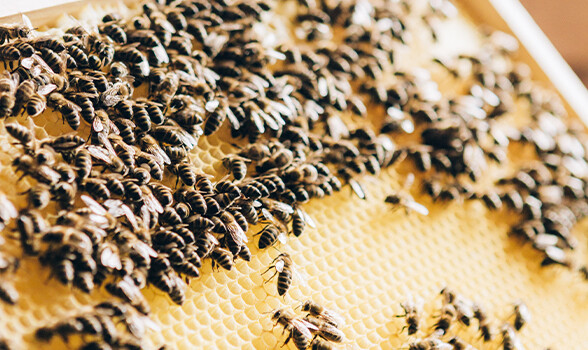
Honeybees
– live in colonies
– chiefly collect nectar
– live in hives
– generalists
– sting can penetrate skin
– flight radius: 3–10 km
Wild bees
– chiefly collect pollen
– need species-specific nesting sites
– specialists
– usually do not sting
– flight radius: 50–300 metres