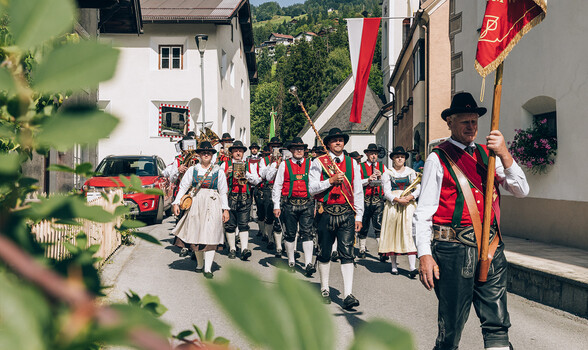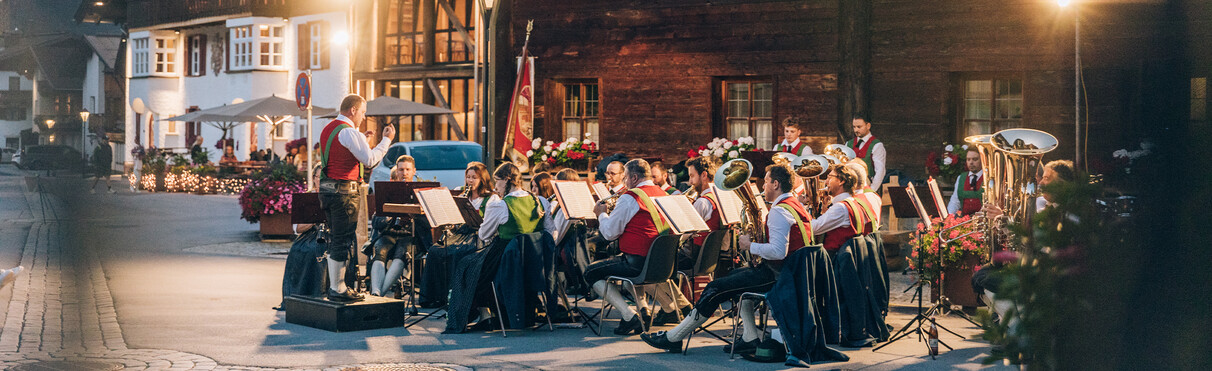
The joy of making music unites people across the valley
An impressive brass band tradition in the Stanzertal valley
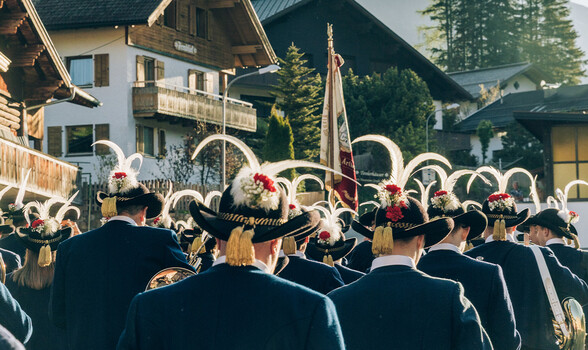
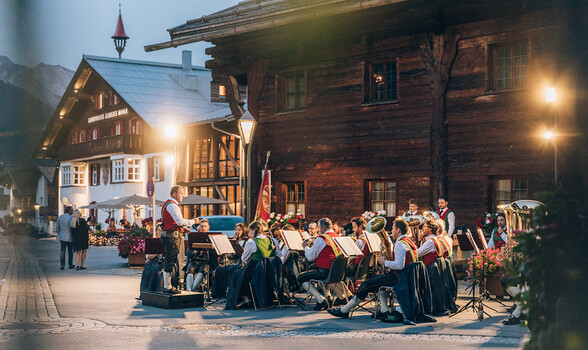
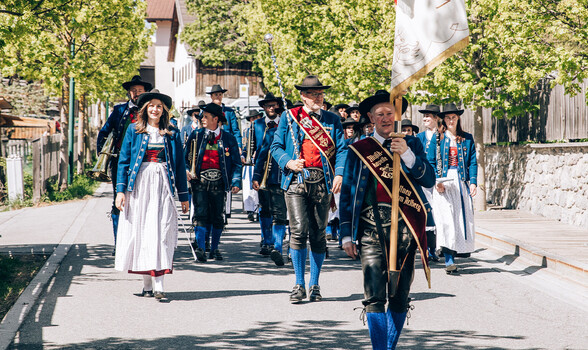
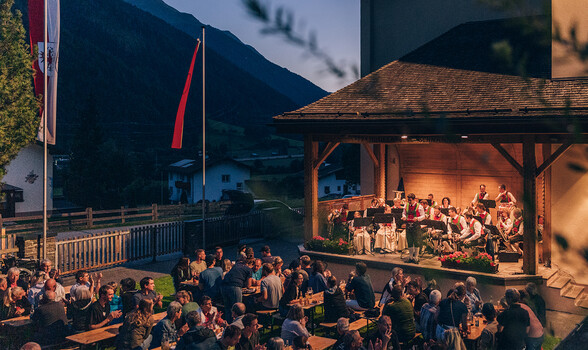
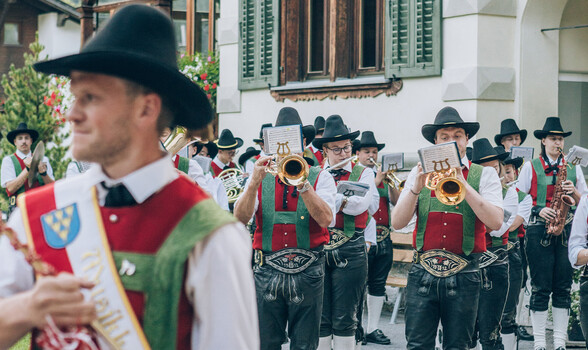
Six brass bands are based in the four municipalities of the Stanzertal valley. Although they share a proud tradition, each band has its own distinctive style. They are an indispensable part of cultural life, from church events and other celebrations to summer concerts in the village square.
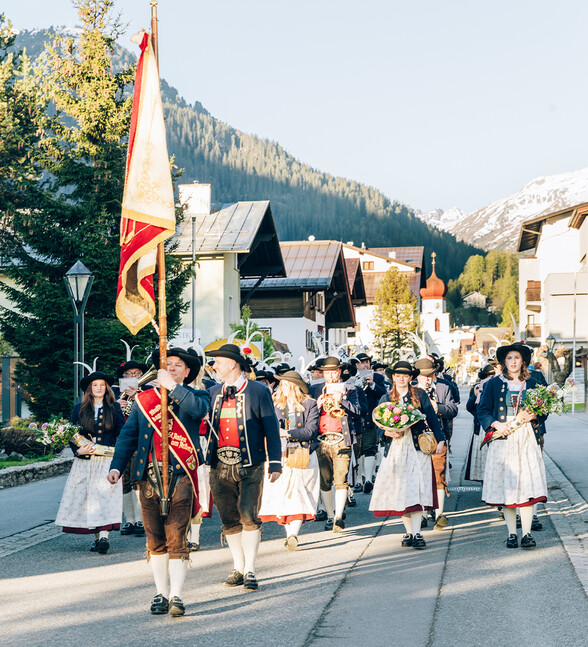
Nowhere else is the culture of brass music more pronounced than in the Alpine region,” says Christian Haueis, leader of the St. Anton am Arlberg brass band. “I hope this tradition continues for many years to come.” He is very pleased with the up-and-coming generation, as are the leaders of the other bands in the Stanzertal Valley. There are plenty of other options for young people, such as skiing or football clubs, although membership of the band is the most time-consuming. This means that you must first complete three to four years of musical training, after which you will be admitted to the association once you have obtained your bronze performance badge. In addition to rehearsals, there are around 100 get-togethers a year, all of which are on a voluntary basis and take place during people’s spare time, as Haueis points out. Herbert Keim, leader of the St. Jakob am Arlberg brass band, also reflected on the significant time invested. This district of the municipality of St. Anton has its own musical identity, even though the two bands share the same roots. “To mark the 100th anniversary of our splitting up, we met in the morning and marched side by side,” Keim recounted with amusement. After all, it’s not about competition when you are also a good match for each other.
With a rich tradition and passion for performance
Wilhelm Schranz, leader of the Pettneu am Arlberg brass band, also recounted the story of how his band was founded. When the Arlberg Railway opened in 1884, Emperor Franz Joseph I of Austria, who was visiting the area at the time, arranged for musicians from Pettneu to be given instruments, which they played to mark the historic occasion. Schranz also emphasised the average age of the association's members, which is 31.5 years, its own youth orchestra, and the relatively high number of women. This has grown across all clubs over the years, something that is welcomed by all. Schnann is another district in the municipality of Pettneu with its own band. “With an average of around 30 members in a village of around 350 inhabitants, both the level of interest and the low average age of our members are impressive,” said leader Daniel Scherl.
Stefan Sailer, leader of the Flirsch brass band, emphasised the importance of the work carried out by youth representatives in promoting young talent. The newcomers are a welcome addition to the older members, and the young players can learn a great deal from them, both musically and otherwise. “It is important to convey to young people how exciting it is to learn an instrument and the opportunities that being part of a club can offer,” says Thomas Lorenz, leader of the Strengen brass band. In unison with his colleagues in other localities, he emphasises the great camaraderie, the friendships that develop across age groups, not to mention, the joy and excitement of performing music together.
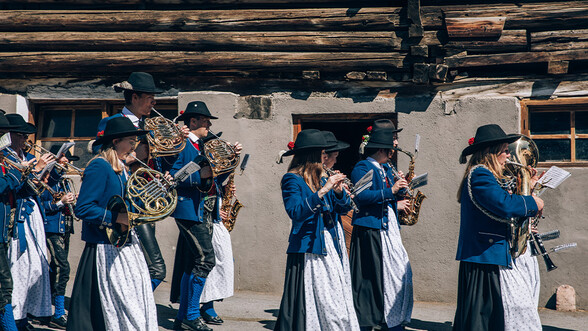
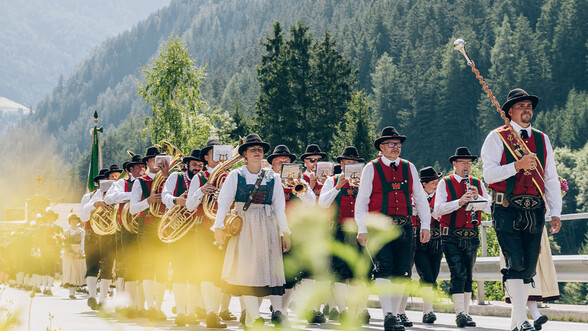

“I firmly believe that every village should have a brass band. Without one, there would be a significant absence and loss of something vital. It ranges from performances at religious events and the annual church festival to weekly concerts in the square during the summer. Another factor that creates a connection is the many wonderful shared experiences, not just when we play music.”
Daniel Scherl,
leader of Schnann brass band
Concerts
Those keen to catch the bands in a live setting can enjoy regular open-air concerts throughout the summer months.


Brass bands in the region
St. Anton am Arlberg
founded in 1901
Members: 60 / of whom 20 female musicians
Leader: Christian Haueis (clarinet)
Music director: Günther Öttl (baton leader)
Youth representatives: Florian Haueis (tenor horn) and Sara Haueis (saxophone)
St. Jakob am Arlberg
founded in 1900
Members: 29 / of whom 9 female musicians
Leader: Daniel Scherl (clarinet) and
Alexander Nöbl (flugel horn)
Music director: Florian Scherl (baton leader and trumpet)
Youth representatives: Laura Nöbl (Marketenderin)
Pettneu am Arlberg
founded in 1884
Members: 50 / of whom 12 female musicians
Leader: Herbert Keim (horn)
Music director: Lukas Spiss (flugelhorn and baton leader)
Youth representatives: Florian Keim (deputy music director and horn) and Hanna Buchhammer-Traxl (flute)
Schnann
founded in 1945
Members: 51 / of whom 22 female musicians
Leader: Stefan Sailer (percussion)
Music director: Dominik Wahler (trumpet and baton leader)
Youth representatives: Daniel Juen (baritone, deputy music director, conductor youth orchestra, baton leader)
Flirsch
founded in 1862
Members: 52 / of whom 23 female musicians
Leader: Wilhelm Schranz (tuba)
Music director: Guido Scherl (flugel horn)
Youth representatives: Wilhelm Schranz, Guido Scherl, Sabrina Rakowitz
Strengen
founded in 1902
Members: 46 / of whom 11 female musicians
Leader: Thomas Lorenz (tenor horn)
Music director: Michael Zangerl
Youth representatives: Gabriel Spiß (percussion)