The Alpine Climate
in the KLAR! Arlberg Stanzertal region
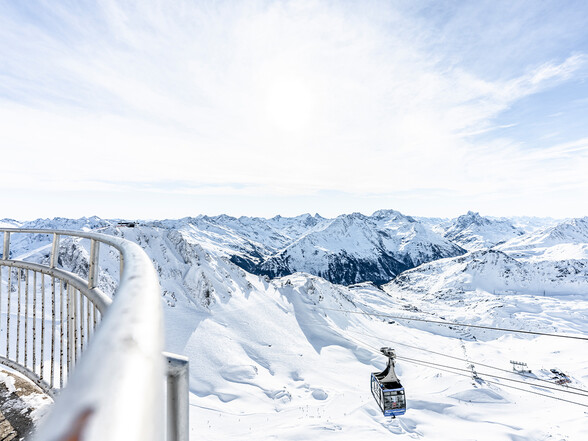
The Arlberg region enjoys plenty of sunshine and favourable snow conditions. But will that also apply in the future? Snow needs cold temperatures, including when it is formed. With increasing temperatures, clouds still form snow crystals in winter, but due to the higher snowfall line, they melt before they reach the valleys.
The trends are also clear in the Arlberg region: snowfall in the valleys has decreased by approximately 50 per cent in recent decades, whereas no significant decline has been observed at altitudes above 2,000 metres. Although snowfall in the higher altitudes begins later in autumn and the snow melts earlier in spring, the temperatures are such that the snow in the higher altitudes lasts well into winter. At least for now, though. These developments have led St. Anton am Arlberg to become a member of the KLAR! programme, which currently includes 79 Austrian regions. They analyse the effects of climate change and develop solutions, focusing primarily on adapting to the new conditions. Meteorologist Dr Susanne Drechsel from GeoSphere Austria and her team regularly carry out scientific evaluations of data results: “You can only adapt to a climate that has stabilised to a certain extent, otherwise you end up lagging behind developments. The future of winter sports and regions with abundant snowfall therefore depends largely on whether we succeed in drastically reducing carbon emissions. In other words, committed climate protection is by no means a passing fad.
Facts about the region
– According to GeoSphere Austria, the average annual depth of snow in Galzig is 250 cm.
– Snow falls in St. Anton am Arlberg in autumn and winter, as well as in spring. Occasionally, it can snow until March, April or even right up to May.
– The coldest months are December to February, with average temperatures of -5°C.
– In March and April, when the snow starts to melt, temperatures average between -1 °C and 3 °C. The sun already shines for up to eight hours a day. A wonderful combination for your spring skiing holiday!
Valluga weather station and weather radar system
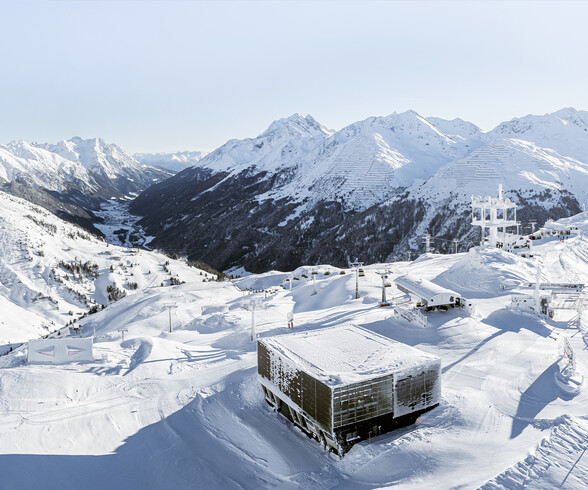
Weather radar systems are the most important instrument when it comes to monitoring. They deliver three-dimensional images of current weather conditions. Unlike a weather station, they also record rain and snow not just at specific points, but across a wide area. Weather radar systems are used to provide an early warning of dangerous weather conditions such as heavy rain and hail. Due to their exposed location, they are also vulnerable to extreme weather conditions such as storms, heavy snowfall and thunderstorms. The weather radar at 2,805 metres on the Valluga was installed two years after the floods of 2005 because, until then, there had been no comprehensive precipitation data for the area. It was severely damaged by lightning strikes in 2017 and has been out of service ever since. It is now being rebuilt with the help of GeoSphere Austria. It will remain on the summit because, if it were in the valley, the mountain would obstruct the radar beam’s direct path. Its proximity to the Valluga cable car top station ensures accessibility for regular data collection. The Valluga weather radar system is expected to be operational in 2027 and will then once again be an essential part of an integrated natural hazard management system.