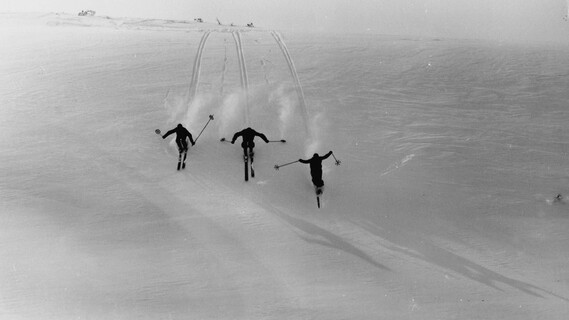
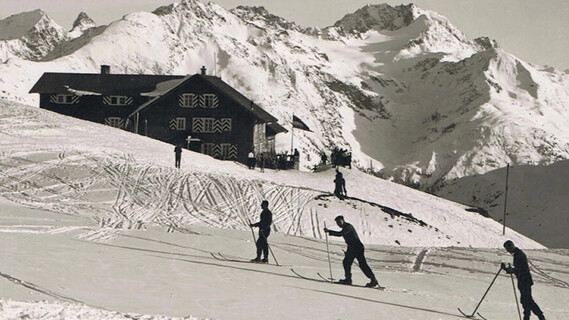
Then and now – always one of the world's most progressive ski regions
Ski Arlberg through the ages
In 1901, six pioneers from St. Anton founded Ski Club Arlberg. In 1921, Hannes Schneider revolutionised alpine skiing and founded Austria's first ski school. In 1937, the first cable car designed for winter operations, the Galzigbahn, was built in St. Anton. In 1984, when the first Revue was published, guests on the Arlberg had 72 cable cars and lifts and 200 kilometres of slopes at their disposal. Today, the 85 state-of-the-art lifts and more than 300 kilometres of slopes represent Austria's largest interconnected ski area.
Ski Arlberg 40 years ago
In 1984, the Schindlergratbahn area and Gampen double chairlift on the Kapall were renovated. In 1984, the first snowmaking system was put into operation in the Galzig Plateau/Kandahar area. A wide variety of installations were built in the 1980s, in addition to continuous investments in avalanche barriers, terrain adjustments and snow-making facilities: Valfagehrbahn, Zammermoosbahn, Schindlergratbahn, Rifflbahn I + II and the Mattunbahn lifts. The Kapallbahn lift was also renovated.
(Source: Arlberger Bergbahnen Cable Car Company information, 2019).
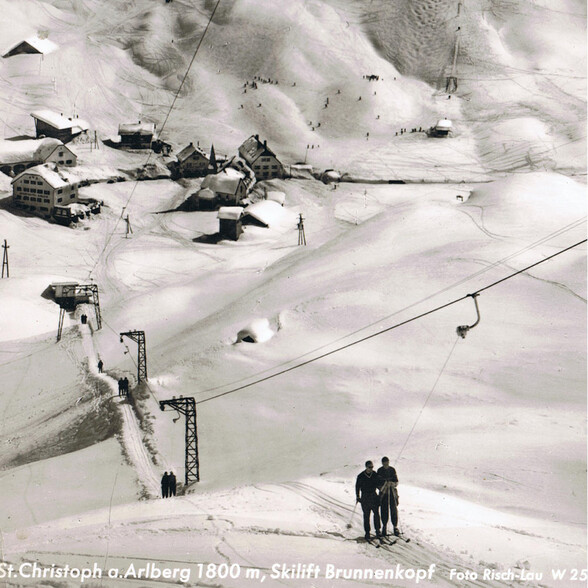
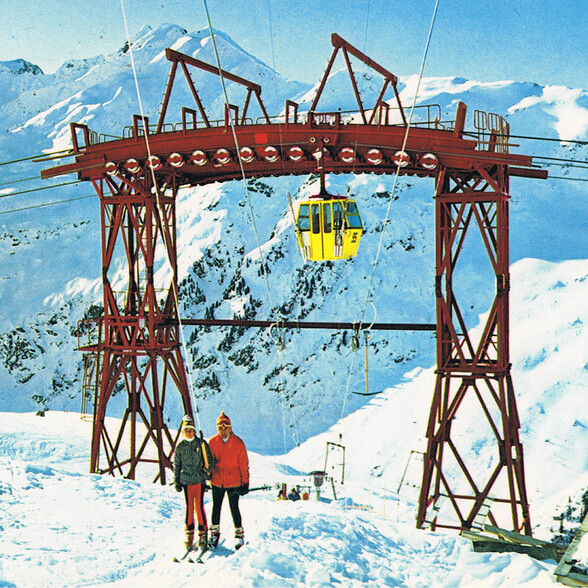
50 Years of Rendl
In the 1970s too, constant investments were made in the expansion of services. For example, development of the Rendl area with the Rendlbahn gondola and three T-bar lifts took place during this time. In 2009, as part of expansions of the Terminal West bus station, the lift was replaced by an 8-seater monocable gondola with heated seats and the new restaurant at the top station was opened. While skiers used to have to take the bus to get from the ski area on Mount Galzig to the old Rendlbahn, it is now only a hop, skip and a jump away in ski boots. Nowadays, winter sports enthusiasts will find four chairlifts and a T-bar lift in the Verwall mountain range area, in addition to the feeder from the valley. Those in the know, by the way, appreciate conditions offered in the Rendl area: thanks to its favourable location, the slopes remain compact for longer in spring and soften only later.

Chosen for you