Mule trails and evasive Habsburgs
The transport history of the Arlberg
So, what went on in the Arlberg, before skiers arrived to make their first turns and more enterprising tourists stopped by? A brief narrative on the Arlberg’s transport history, with its many twists and turns ...
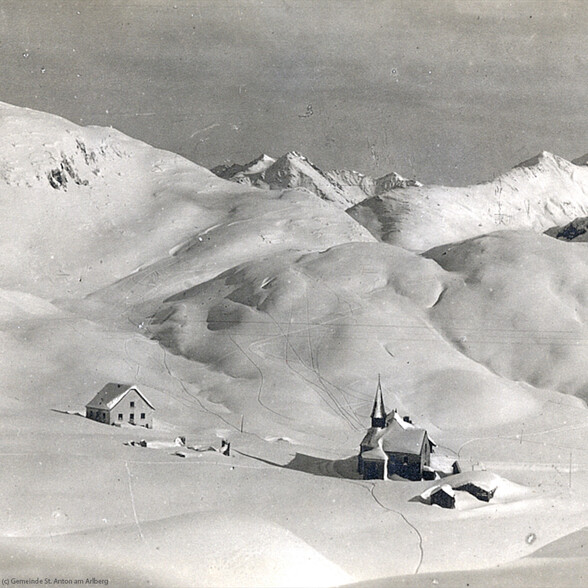
Early route over the mountain pass
A mule track led over the comparatively low Arlberg Pass (1793 m) as early as the Bronze Age, and a passable road is documented in the 14th century. This was no panoramic sightseeing tour, however, as the route was prone to landslides and avalanches and almost impassable in winter. As many people attempted, nonetheless, to navigate this alpine pass, Heinrich Findelkind built a life-saving refuge there in 1386, resulting in him founding the Arlberg Hospice and Brotherhood of St. Christoph.
Detours over the Fern-Pass
In the 15th century, the road over the Arlberg fell into disrepair and traders took long detours over the Fern-Pass. The result of a poor transport policy? Other factors were more likely at work here: the people of Allgäu preferred to keep traffic to the Alpine foothills for economic reasons, while the Habsburgs preferred an impassable western border of Tyrol for military reasons.
In the 18th century, however, transport development could be curbed no longer: merchants from Bolzano built the Josephine Road over the Arlberg Pass, which opened in 1787. A century later, rails paved the way to the future: the railway era had begun!
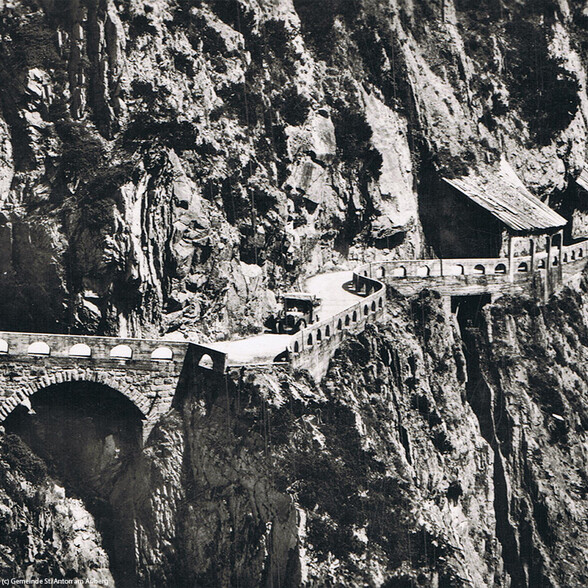
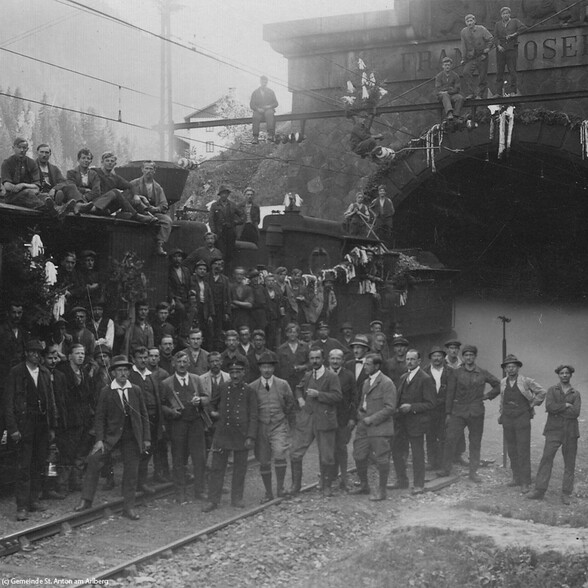
Full steam ahead into the new era
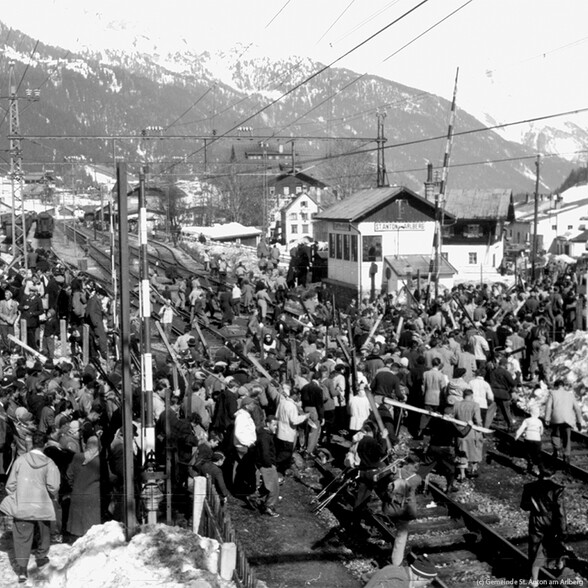
The unveiling of the Semmering Railway in 1854 demonstrated that a mountain railway was a viable prospect. In 1881, the Austrian Emperor Franz Joseph I, an enthusiastic rail traveller from the very outset, visited the Austro-Hungarian Monarchy’s largest construction site and travelled to Bregenz in the Arlberg Railway’s Imperial Train on 20th September 1884. It was already apparent during the planning stage that the station would be called ”St. Anton am Arlberg“, although the community name at the time was still Nasserein. The station functioned as a water station for supplying the steam locomotives and served as a changeover point for the banking engines. Due to operational requirements, St. Anton am Arlberg was also an express train stop.
A sinful village?
The railway brought change to St. Anton and its population structure: during construction of the tunnel, 2,200 workers from all corners of the Habsburg Empire joined the 900 inhabitants. Some saw many angers in this development. The priest of St. Jakob passed harsh judgement: ”The four-year tunnel construction brought severe trials to the simple valley people. For the men, the dangers of hedonism, in particular drunkenness in the 34 taverns, transgression of fasting days and desecration of Sundays, were the greatest. For the women, especially the virgins, the temptation of moral corruption was immense, and 13 girls of the village had to bear the ignominy of being unmarried mothers.“
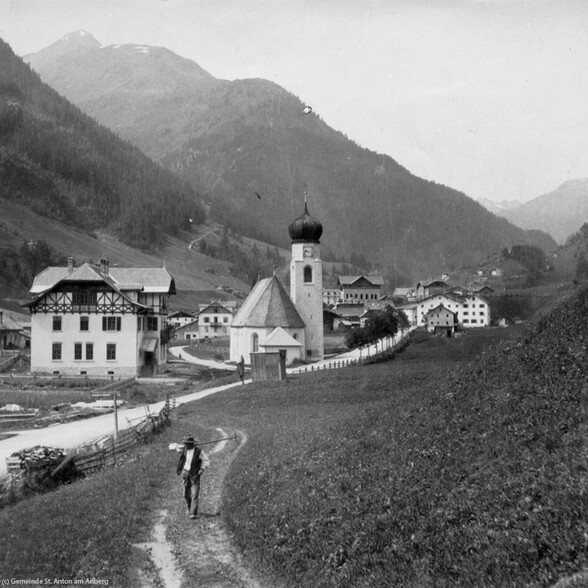
Tourism brings tolerance
As increasing numbers of ”foreigners“ disembarked from the train to spend their holidays on the Arlberg, society became more tolerant and the dreamy mountain village became socially conventional: in 1896 Carl Schuler built the Hotel Post in St. Anton with 110 beds, central heating, electric light, bowling alley and tennis court. An investment that was quickly emulated by many because, thanks to the ski pioneers, the Arlberg gained international repute which, in turn, made further road expansions necessary. In 1978, the Arlberg Road Tunnel was opened as part of the Arlberg Highway. It too connected villages and led to a future marked by economic success.