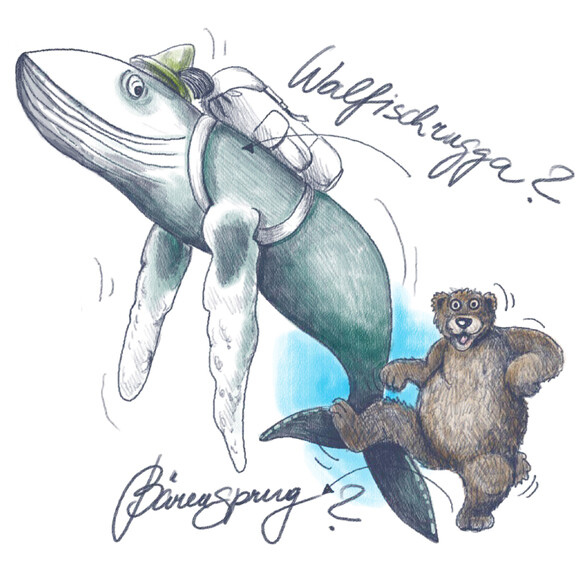
Hexatregli and Walfischrugga
How the areas around St. Anton am Arlberg came to be given their sometimes peculiar field names.
Where are your favourite places around St. Anton am Arlberg: on the “Neaderseita“ or on the valley side opposite? When deciding, it may help to know that the ”Neaderseita“ is the shady side, as opposed to the “Sunnseita“ – sunny side. If this is any consolation: even the locals are not as familiar with the old field names as they once were, because they are disappearing increasingly from the vocabulary. Working in conjunction with the Tyrolean Provincial Archives, St. Anton am Arlberg is making a concerted effort to preserve these field names, so this important cultural heritage does not disappear.
Dancing Cows
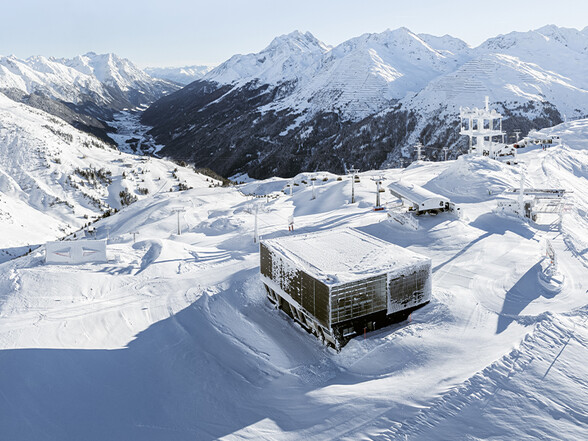
“Tanzbouda” (dance ground) can be found in the middle of the ski area, the Tanzboden lift is even named after it. It is not, however, named after any dancers. Community forester. Otto Jehle, thinks that grazing cows may been subjected to an oncoming blast of wind at this spot, which made them turn around quickly and may actually have looked as if the cows were dancing.
The witch of Stiegenegg
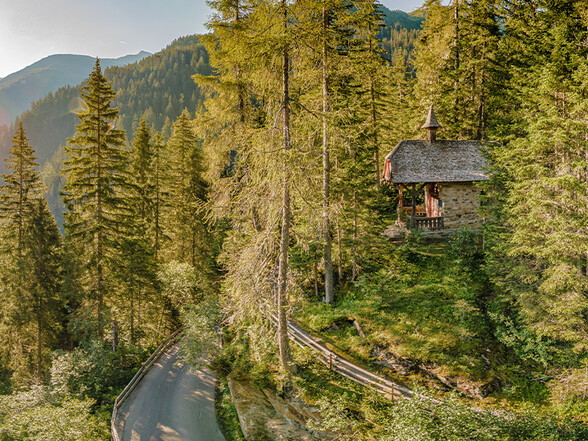
According to scary ancient folklore, terrible happenings led to field names such as “Hexatregli“ (witch related). It is said that a witch abducted a child. As she tried to kill the child by pushing it against a rock face, the rock drew back, thereby preventing this miserable occurrence from taking place. On Verwallweg Trail, after Stiegeneck Chapel, the impression of the head and body of the child can apparently be seen on the right.
Field name collection
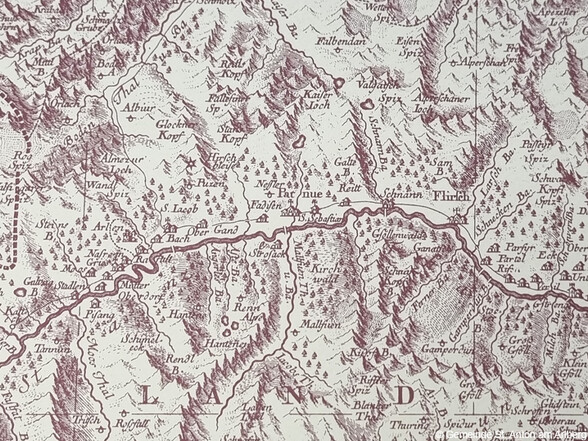
St. Anton is one of Tyrol’s largest municipalities, covering a surface area of 165 square kilometres. Arlberg’s geographical expanse gave rise to ca. 1,200 field names. Two community workers have managed to source and list these names. thus preserving them for eternity: Forester Otto Jehle knows many of this ancient monikers because of his job. With Jehle’s help and the support of other regional experts, Robert Spiss was able to add all known field names to a community map – in Arlberg dialect. Many of these names had never even been documented in writing before.
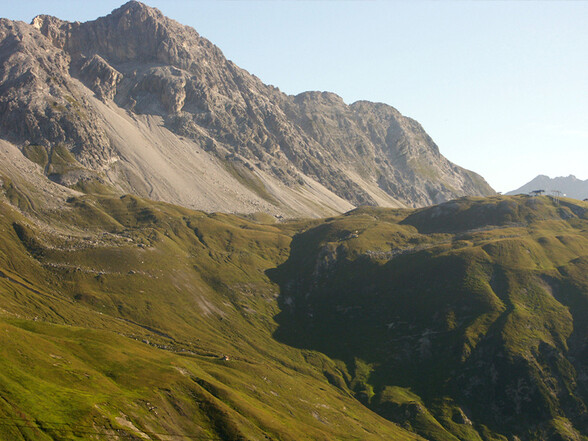
New names emerge
Notwithstanding road names, are new field names emerging despite the widespread use of GPS? Yes, says the expert on St. Anton. If, for example, a ski instructor wants to point out a specific location on the slopes, they often invent a new name to suit the purpose.
The "Loarfa": If the sun is shining right, clearly recognizable facial features, called “Loarfa“ (mask), appear on the slope just beneath the top terminal of Kapall cable car.
Field names
|
„Rifa“ |
starting point of a steep landslide |
|
„Schrofa“ |
rock |
|
„Mad“ |
place where hay was mown |
|
„Gampa“ |
wide, mostly at, higher ground |
|
„S´Krama“ |
area of dense juniper population |
|
„Kohlplatzli“ |
place where charring took place |
|
„Astwald“ |
area of many trees with knotty wood |
|
„Maß“ |
refers to previous “slash and burn” forest clearing practices |
|
„Fleischpleiß“ |
(for example in Faslfad): suggest that animals often fell down the steep terrain |
|
„Schafgliger“ |
place where sheep often lay |
|
„Gaßsteig“ |
path along which goats were herded |
|
„Bärensprung“ |
(section of the World Cup downhill racecourse): where the name originates from is not clear, but seems to refer to a wild bear. |
|
„Walfischrugga“ |
in certain light, the area appears to resemble a big fish |
|
„Loarfa“ |
(located in the north of St. Anton): The name refers to what the area looks like from a distance, because it looks like a carnival mask in a certain light |